
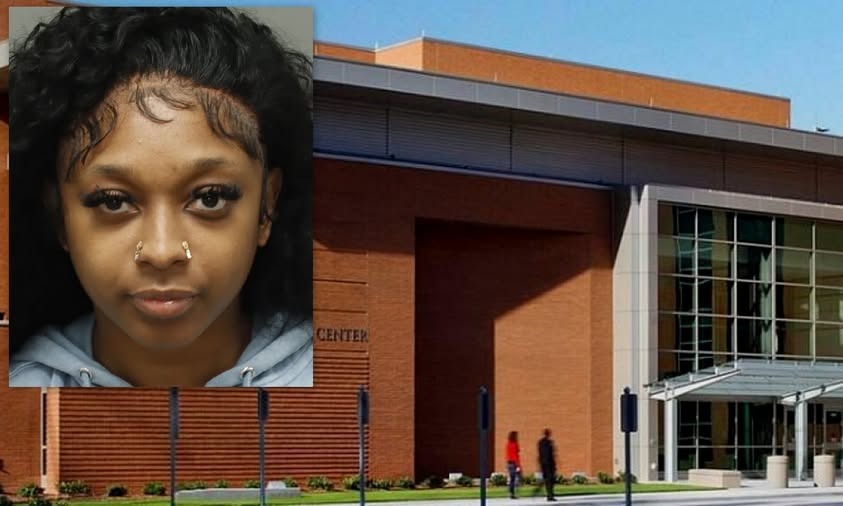
“Areeyel Destiny Waiters Arrested Again After Using Meta Smart Glasses to Secretly Record Wake County Detention Center Video, Posting Footage on Facebook – Facing Felony Charge in Raleigh, NC”
Inside the Jailhouse Livestream: How Areeyel Destiny Waiters Used Meta Smart Glasses to Bypass Security and Land Back in Custody
In an era where wearable technology is becoming increasingly sophisticated, a bizarre and cautionary tale has emerged from Wake County, North Carolina. What began as a routine arrest for a 27-year-old woman quickly spiraled into a high-tech breach of jail security, a viral social media scandal, and a second arrest on felony charges. This is the story of Areeyel Destiny Waiters, a pair of inconspicuous Meta smart glasses, and how a video recorded from inside a detention center exposed surprising gaps in inmate monitoring—while landing its creator back behind bars without bond.
The Initial Arrest: A Failure to Appear
On April 8, 2026, law enforcement officers in Wake County, which encompasses the bustling capital city of Raleigh, apprehended 27-year-old Areeyel Destiny Waiters. The charge was relatively straightforward: failing to appear in court. Such warrants are common, often issued when an individual misses a scheduled hearing for a prior misdemeanor or traffic violation. For Waiters, however, this mundane encounter with the justice system would soon take an extraordinary turn.
After her arrest, Waiters was transported to the Wake County Detention Center, a large facility located in downtown Raleigh that houses hundreds of inmates awaiting trial or serving short sentences. During the standard intake process—which includes searching personal belongings, changing into jail attire, and logging any contraband—officers completed their checks. But they missed one critical detail: still perched on Waiters’ face was a pair of Meta smart glasses.
The Overlooked Device: Meta Smart Glasses as a Hidden Camera
Meta smart glasses, developed by the company formerly known as Facebook, look nearly identical to ordinary prescription eyewear or fashion frames. The latest models embed a discreet camera, tiny speakers, and touch controls along the arms. They can capture photos, record video, and even livestream directly to platforms like Facebook or Instagram—all with a simple tap or voice command. Unlike a bulky smartphone or a visible recording device, these glasses blend in seamlessly. In a busy, understaffed detention center, where officers are focused on preventing fights, drugs, and weapons, a pair of glasses didn’t raise any red flags.
Waiters, having been booked and placed in a holding cell or general population area, quickly realized she was still wearing the glasses. More importantly, she understood their capability. Over the following hours—or perhaps days, depending on when she accessed them—she used the glasses to secretly record video from inside the jail. The footage captured the mundane yet restricted reality of life in a detention center: the clang of metal doors, the conversations of other inmates, the layout of common areas, and the interactions with correctional staff. Under North Carolina law, as in most states, inmates are strictly prohibited from possessing any communication or recording device. The rationale is clear: such devices can be used to coordinate escapes, intimidate witnesses, plan further crimes, or compromise the safety and privacy of both inmates and officers.
From Jail Cell to Facebook Feed: The Viral Spread
After a period of detention—sources indicate it was likely a short stay, possibly for a few days—Waiters was released, presumably after posting bail or having the initial failure-to-appear charge resolved. But instead of putting the incident behind her, she made a fateful decision. She transferred the video from her Meta smart glasses to her phone or computer and uploaded it to her Facebook account.
The footage, raw and unedited, showed unmistakable interior views of the Wake County Detention Center. While it may not have contained violence or graphic content, its very existence was a breach of security protocols. Within hours, the video began circulating beyond her friends list. It was shared in local Raleigh community groups, then picked up by social media influencers who focus on true crime and jail exposés. Commenters expressed shock that an inmate could smuggle out such footage so easily. Others tagged local news stations and the Wake County Sheriff’s Office, demanding answers.
Authorities Discover the Footage: Investigation and Warrant
The Wake County Detention Center’s administration first learned of the video when a tipster alerted a corrections officer. By then, the clip had already been viewed tens of thousands of times. Investigators from the sheriff’s office launched an immediate inquiry. They reviewed the video frame by frame, identifying specific hallways, cell blocks, and signage unique to their facility. There was no doubt: the recording had been made from inside the jail, without authorization, by someone who had recently been in custody.
Digital forensics teams traced the Facebook account back to Areeyel Destiny Waiters. They confirmed that the upload timestamp matched a period shortly after her release. Further scrutiny revealed that the video had been captured using a Meta smart glasses device—distinguished by the slight fish-eye lens effect and the metadata embedded in the file. Authorities also reviewed the detention center’s own intake footage from April 8, 2026. There, clear as day, was Waiters being processed while still wearing the glasses. No officer had removed them or logged them as contraband.
With probable cause established, a judge issued a warrant for Waiters’ arrest. The charge: felony possession of a communication device by an inmate. Under North Carolina General Statute § 14-258.4, it is a Class H felony for any person in the custody of a local confinement facility to possess a mobile telephone, pager, or other communication device. The law explicitly covers cameras and recording equipment. A Class H felony in North Carolina carries a potential sentence of 4 to 25 months, depending on prior criminal history.
The Second Arrest: Back in Custody Without Bond
On a date shortly after the investigation concluded—likely within days of the video surfacing—law enforcement officers located Waiters and arrested her again. This time, there was no oversight. She was booked into the same Wake County Detention Center, but now the guards were fully aware of her previous actions. During the intake process, every piece of her personal property was confiscated and inventoried. She was stripped of any potential recording devices, including her Meta smart glasses, which were seized as evidence.
Waiters appeared before a magistrate judge for her first appearance on the felony charge. Given the nature of the offense—using a concealed device to secretly record inside a secure facility—and the risk that she might destroy evidence or flee, the judge ordered her held without bond. As of this reporting, Areeyel Destiny Waiters remains incarcerated at the Wake County Detention Center in Raleigh, North Carolina, awaiting her next court appearance. Her public defender has not yet issued a statement, and it remains unclear whether she will plead guilty, seek a plea deal, or fight the charge at trial.
Legal and Security Implications: A Wake-Up Call for Jails
The Waiters case has sent ripples through North Carolina’s correctional community and beyond. It highlights a growing challenge for detention centers: wearable technology. While prisons and jails have long banned smartphones and digital cameras, they have been slower to adapt to discreet devices like smartwatches, wireless earbuds, and smart glasses. Most intake training focuses on obvious metal objects, drugs concealed in body cavities, and weapons. A pair of glasses—even ones with a hidden camera—can easily slip through.
“This is a textbook example of technology outpacing policy,” says Dr. Marla Hendricks, a criminologist at North Carolina State University in nearby Raleigh. “Correctional facilities need to update their search protocols immediately. Smart glasses are not just for tech enthusiasts anymore; they are affordable and widely available. If an inmate can walk in with them, they can walk out with footage that compromises officer safety, inmate privacy, and operational security.”
The Wake County Sheriff’s Office has since announced a review of intake procedures. In a brief statement to local media, a spokesperson said: “We are aware of the incident involving Ms. Waiters and have taken steps to ensure that all wearable electronic devices are identified and removed during booking. We thank the public for bringing this matter to our attention.” The office declined to comment on whether any staff members would face disciplinary action for missing the glasses during the April 8 arrest.
The Role of Social Media: Facebook as a Double-Edged Sword
Facebook, the platform owned by Meta (the same company that makes the smart glasses), found itself in an awkward position. On one hand, the video was uploaded using its servers and shared widely. On the other hand, the footage itself was evidence of a crime. After being contacted by law enforcement, Facebook removed the video for violating its policies against content that compromises security or privacy. However, by then, copies had already been re-uploaded by other users and shared on TikTok, X (formerly Twitter), and YouTube. The cat was out of the bag.
This incident also raises questions about Meta’s product design. The smart glasses include a small LED light that illuminates when recording, ostensibly to alert bystanders. But that light can be easily covered with a finger or a piece of tape—or simply ignored in a chaotic jail environment. Privacy advocates have long warned that these devices could be used for non-consensual recording. The Waiters case provides a vivid real-world example.
Comparing to Other Jail-Tech Breaches
While shocking, Waiters’ actions are not entirely unprecedented. In 2023, an inmate in Maryland used a smuggled smartphone to livestream from inside a prison on Instagram, amassing thousands of viewers before guards noticed. In 2024, a detainee in Texas used an Apple Watch to record a confrontation with officers and later posted the clip on Snapchat. However, the use of smart glasses—which are far less conspicuous than a phone or watch—represents a new frontier. Because they sit on the face, they can record exactly what the wearer sees, creating a first-person perspective that feels immediate and immersive.
What Happens Next for Areeyel Destiny Waiters?
As of April 2026, Waiters is being held in the Wake County Detention Center without bond. Her preliminary hearing is expected within the next 30 days. If convicted of the Class H felony, she faces a potential prison sentence. However, first-time offenders often receive probation or a reduced sentence, especially if they have no prior felony record. The court will also consider that she was not convicted of a violent crime, and the recording did not appear to show any ongoing criminal activity inside the jail—just the daily routine.
That said, prosecutors may push for jail time to send a deterrent message. “You cannot turn a detention center into a reality TV set,” says Wake County District Attorney Lorrin Freeman, whose office is handling the case. “We take security breaches of this nature extremely seriously. Inmates have no right to record inside our facilities, and those who do will face felony charges.”
Waiters’ original failure-to-appear charge remains on the docket as well. It is unclear whether that matter will be folded into her current case or resolved separately.
Conclusion: A Cautionary Tale of High-Tech Hubris
The story of Areeyel Destiny Waiters is equal parts absurd and alarming. A young woman, already in legal trouble, manages to walk into a jail wearing a camera on her face, records forbidden footage, posts it on Facebook, and only faces consequences after the video goes viral. But the twist—being arrested again and held without bond—underscores a timeless truth: even in the age of smart glasses, the long arm of the law eventually catches up.
For correctional facilities across the United States, the incident serves as a urgent reminder to update training and procedures. For tech companies like Meta, it’s another data point in the debate over how to balance innovation with misuse. And for the rest of us, it’s a fascinating glimpse into how quickly a seemingly clever idea—recording your own jail stay—can turn into a second, far more serious criminal charge.
As of today, Areeyel Destiny Waiters remains in the Wake County Detention Center in Raleigh, North Carolina, awaiting her day in court. Her Meta smart glasses are now evidence. And the video that she thought would make a statement about her experience has instead become the proof that put her back behind bars.
Leave a Reply